Adsense

Thursday, 28 August 2014

Thursday Throwback. The history of the Titanic Necklace. The Heart of the Ocean

This weeks Thursday Throwback is the fictional 'Heart of the ocean' necklace which features in the blockbuster movie Titanic that came out in 1997 and was the first film to gross a billion dollars.
Did you know that the fake prop necklace used in the film was later re commissioned as a real sapphire and diamond necklace? It's true.

The Heart of the Ocean (also known as Le Coeur de la Mer) was originally made as a prop for the movie by the jewellers Asprey & Garrard and was made out of cubic zirconia's and set in white gold but after the movie they where requested again four years later to remake it for real this time to be sold for the Diana, Princess of Wales Memorial Fund.
One of the biggest challenges facing the jewellers at the time was where to find a sapphire that big! They searched the world and looked at several candidates but eventually found a 174 carat triangle sapphire in Sri Lanka, which was re cut to the famous heart shape and down graded to 171 carats. Next was the diamonds, all 36 carats of them. All the diamonds where matched up on there sizes and then re cut to match each other, there was 103 diamonds in total.
They used beeswax and hand tools to position the diamonds just right in the platinum setting, often taking them back out for re positioning until they where perfect, next they added the centre piece sapphire, le Coeur de la mer.
The necklace sold at Sotheby's auction house in Beverley Hills for $17 million and with the agreement that Celion Dion could wear it to the 1998 Academy Awards ceremony, which she did 2 nights later.
Whilst researching this necklace I came across a real necklace that was actually on the Titanic. It wasn't heart shaped and it may not have even been a sapphire but it did have a love story like the movie. It belonged to a young woman called Kate Florence Phillips from Worchester, England she was running away with Henry Samuel Morley to elope. He was the owner of some “Purveyors of High Class Confectionery” shops in London and she was one of his employees, he was also married with a child. In order for them to run away together he had sold his shops and left his wife and child with some money before booking tickets on the unsinkable Titanic with Kate. As a present he brought her a necklace it had a blue square in the middle and diamonds around that. They boarded in second class as Mr and Mrs Marshall and where excited for their future together.
Unfortunately for them their dreams where shattered when the ship hit the iceberg and sunk. Henry Samuel Morley couldn't swim and died in the waters and Kate Florence Phillips survived with only the necklace and her nightgown on her. She was rescued by the Celtic and taken back to England where she found out she was pregnant and later gave birth to a baby girl.


Friday, 22 August 2014

Throwback Thursday. A quick guide to Celtic jewellery.


First today I'd like to say thank you to all those who are making my Thursday throwback posts a success. I'm really enjoying researching and writing about these subjects so it's lovely to see your also enjoying reading them.
This week is the turn of the Celts. I first became interested in the designs of the Celtic period when I was little and I'd go to stay at my gran's place. She had a series of books all about mythology and ledge sd, these books where beautiful adorned with the strong colours and intricate patterns of Celtic design. They captured my imagination and I'd love to draw my finger over them trying to follow the patterns like the picture above.
The celts date back to around 2000 years ago and originated in mid Europe, travelling north. Not a lot is known about their beliefs or knowledge because they communicated verbally instead of writing it down. However we can surmise that jewellery meant a lot to them, we have lots of archeological finds which show us there brilliant craftsmanship.
After 450AD the Christians adopted this way of design into there manuscripts, a great example of this is the lindisfarne gospels. Something I'd love to go see someday.
The designs are made of lots of different patterns the main ones being Celtic cross', motif animals, spirals and knots. 
Closer to our own time Celtic design inspired some of the art Nouveau period designs. I've recently discovered a jewellery designer from this time called Archibald Knox, who I will definitely need to look in to more. His designs are really beautiful

Below is my own take on a Celtic design, I've used tiny heart beads with a Celtic knot in the middle. These beads are some of my favourite beads I've brought


Saturday, 16 August 2014

Feeling excited.

I've spent the last year working as much as I possible can with my day job and promoting and making jewellery for Fashion Magpie Jewellery in the evenings. Eventually all my hard work has paid off and I've managed to save up for a holiday. I'm so excited, it was 2008 the last time I visited a different country so I feel well over due for a bit of foreign culture.
Travelling is something I love and I've been really fortunate to have visited a lot of the places I'd like to. However the world is a large and beautifully diverse place so I have plenty of places left to visit too!
This time will be my first holiday abroad with my fiancé and we'll be travelling to Zante which is in the Greek isles. It's not somewhere I know a lot about but I've been researching and it looks like it's going to be beautiful, they say it's famed for its clear waters which make the boats look like there floating on thin air. The pictures look very intriguing!
 
I'm leaving on Sunday and will be back on the 25th August so if you order any of Fashion Magpie Jewellerys items please bare in mind I won't be posting any orders until I'm back in the country. 
I've set up my Thursday throwback and folksy Friday posts to automatically post themselves next week, so hopefully if I've done it right you can still get them blog posts even though I'm away. Hope you enjoy them!
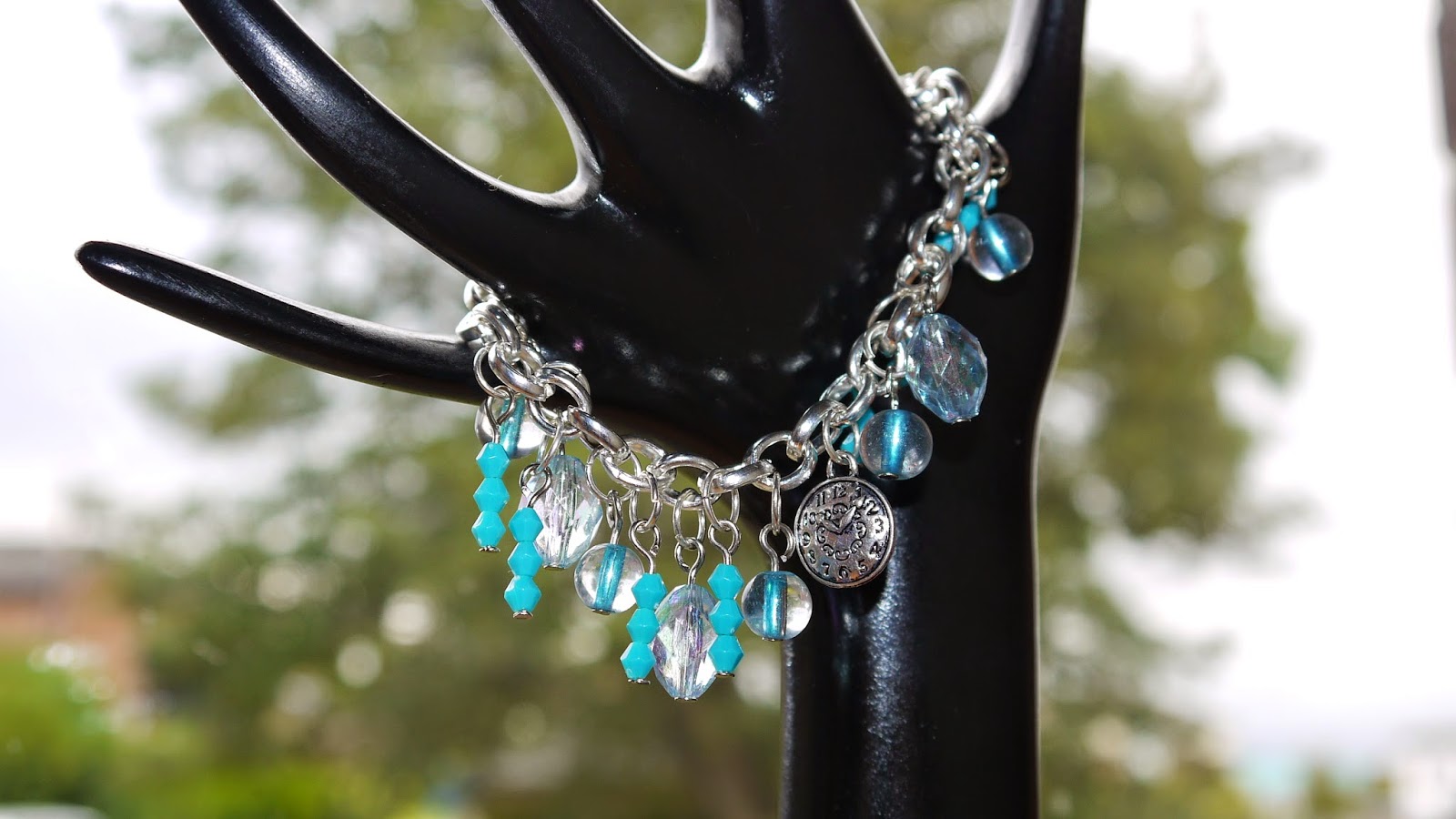
Right I must go make sure I've packed everything so until next time I'll leave you with some images of the new pieces I've listed for sale.


http://folksy.com/items/6504138-Clock-Blue-Charm-Bracelet
 

Friday, 15 August 2014

Folksy Friday. What is Talk Folksy?

I've recently discovered Talk Folksy on Folksy.com and I love it! Talk Folksy is a forum for folksy users and is full to the brim of lovely friendly fellow crafters.
There are seven categories to choose from when you log in, my favourites are Shop Talk and showcase. Shop talk is, as the name suggests, about talking about your folksy shop and discussing any issues or asking for advice. Showcase is for just that, showcasing your creative talents to anyone who will listen! Its good for getting people looking at your shop when your having a lull in sales, just basically find a topic and say hi. Fellow forum users are in the same boat as you and are always happy to say hi back and take a look at your shop as long as you return the favour ( it's only polite after all!!)
Another Category worth visiting from time to time is the Fancy a cuppa? Page, where you can have a general chit chat with people and make friends talking about anything, not necessarily craft related topics.
The other categories are Wanted, used for looking for supplies your having difficulty finding. craft talk, which is about talking about crafty things like tutorials. UK craft events which is finding or promoting a craft event in the UK and the last category is Meta which is asking questions about the forum its self, sort of like a help desk.
So there it is Talk folksy in a nutshell, hope this inspires you to join, it's well worth taking a look and saying hi.

Thursday, 14 August 2014

Thursday Throwback. Art Nouveau part 2. Who was Rene Lalique?

I enjoyed writing last weeks post, what is Art Nouveau?, so much I decided to make it a two part post. This week is part two and I wanted to tell you more about one of the leading jewellery designers of the period, Rene Lalique. It was also an excuse for me to research the man behind some of my most favourite pieces of Art Nouveau jewellery.
Rene Jules Lalique was one of the founders of modern jewellery. Lalique was 16 when he took a job as apprentice to Louis Aucoc who was among some of the leading jewellers of the day. It was with Aucoc that Lalique learnt jewellery production and design from the ground up. In 1878 he joined crystal palace school of art Sydenham, London and studied graphic design and developed his naturalistic approach to his pieces. After 2 years in London he moved back to Paris where he grew up, it was here his career started to really take off and he made pieces for Cartier and Boucheron as well as having some rich private clientele too. In 1890 he opened his own shop in the opera district of Paris. It was during his time at his new shop that most of the pieces he'd come to be known for where made, brought up from the depths of his creativity through experimentation with glass.
Lalique embraced Art Nouveau and it's design elements especially the naturalist and japonisme. He used materials not widely seen in the jewellery industry before his time, especially high end jewellery. My particular favourite he uses is glass, I'm a big fan of the effects he uses to make the glass frosted and the detail he then has in the glass, when a light is shone through them they look just like a black and white photograph, the shadowing is the best you've seen. It was this form of craft he would go on to use more and more in his later life becoming a world class glassmaker of not just jewellery but also wall lights, vases, screens and just about anything else. His best known pieces would include the dining room and salon room of the SS Normandie and the font of st. Matthews church at Millbrook in Jersey.
In 1897 he was awarded the croix de la legion d'honneur for the jewellery he exhibited at the world fair in Brussels. The best way to describe what this honour is, is to compare it to the British knighting of a sir, so pretty impressive! 

Lalique died 5th May 1945 in Paris, he was buried in Pere Lachaise Cemetery in Paris.
Rene Lalique has been a truly interesting man to research, his jewellery is wonderful but I now also think a lot more of the man behind the jewellery. He worked hard and was rewarded with a great professional life!


Friday, 8 August 2014

Folksy Friday favourites

Folksy Friday this week is all about favourites. Folksy gives you the option to favourite an item or shop that you like.
Thought I'd show you some of my own favourites.

My favourite shop on Folksy is Josephines. The necklace below is one of my favourite at the moment I love the picture of the blue tits and the use of the pearls.
Another favourite of mine is babooshka, she makes 50's inspired jewellery.
It' not just jewellery shops I favourite on Folksy either. There is a whole wealth of different craft stores available. There is one I like called Genevieve Cseh Art, they do the most beautiful paintings. The one below Is a print of an acrylic Painting I love. It's the colours that drew me in, I love autumn and going for walks with the leaves fluttering down around you, this picture sums it up perfectly.
Hope you've enjoyed my pick of items from Folky.com.


Thursday, 7 August 2014

Throwback Thursday. What is art nouveau jewellery? Part 1

Art Nouveau is by far one of my favourite time periods for jewellery, but what is Art Nouveau?
In the later years of the nineteenth century there was a lot happening such as the Japanese where invited to exhibit at the 1862 international exhibition in London. This was the first time many had seen work like this, today when we see a Japanese print or wood cuts we take it for granted, we've seen it all before but back then it was all new and was named japonisme.
Another movement was the emergence of arts and craft in England which incorporated art into everyday items.
From japonisme and art and crafts came Art Nouveau, which blended the two main movements of design into one beautiful period in time.
The name Art Nouveau came from a shop in Paris owned by the art dealer Samuel Bing, who was looking to relaunch his business with a new name. He named it "L'Art nouveau" and invited all the big names of the time to his art gallery to exhibit.
The main feature of most designs of Art Nouveau is what's called the whiplash. This is the free flowing line in a design used to show movement, it was best seen in a revival of Celtic design in England which at its heart has knots, circles and squares all intertwined.
The woman's hair in this brooch is an example of whiplash
 
Art nouveau covered many areas of design but it is jewellery I'm most interested in and was first drawn to this period through. The jewellery normally has some kind of insect, animal or mythical being interpreted on and there are various uses for enamelling used. It was the enamelling that first caught by eye. I, as you probably already know if you read my blog a lot, use jewel enamels in my own designs. It's a different kind of enamel to the kind used in the art nouveau period but it still gives the same beautiful lustre to a piece like the genuine article. One use for enamel used time and time again in this period is to decorate the wings of a beetle, it's something that's definitely on my to do list for future project!
Before art nouveau came the Victorian era, which for all it's wonders and developments was also a little bit reversed when it came to human form in all it's glory. So art nouveau came as something of a shock to purest Victorians who had hardly even seen a woman's ankle never mind her whole body laid bare in the form of a brooch or other adornment. One of my favourite jewellers of the time was Rene Lalique who also became known for his pieces of jewellery showing the female body. Personally I like some of his others more then the trademark pieces. In next weeks Thursday throwback I'll be going into more detail about the man behind the jewellery and more pictures to show you of the beautiful pieces he made.

Another favourite of mine from the period was a company what is still around today, Tiffany and Co. They set out with the aim to make one of a kind pieces usually with unusual gems, pearls and incorporated the flowing lines and motifs of the time into each piece.
Unfortunately as with all good things it had to end somewhere. With war in Europe looming art nouveau shrank back and it wasn't until after the war some of the design elements of this fabulous period where picked up again in a new movement called modernist in the 1930s.